
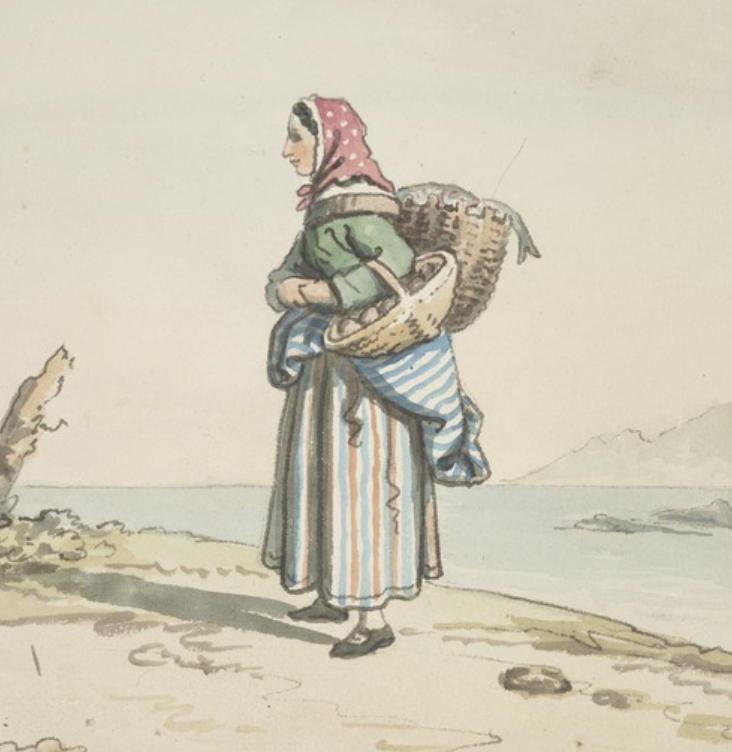
I had many opportunities this week to think about Western Civilisation and its 20th century rupturing. First, I got down to writing my review of Anna Kalinowska’s Clothed with Beauty: A Catholic Philosophy of Dress, a book I recommend to everyone who has ever wondered why Edinburgh’s Princes Street teems with people in almost identical drab outfits when Edinburghers used to dress like this:
Or, even better, like this:
Or this:
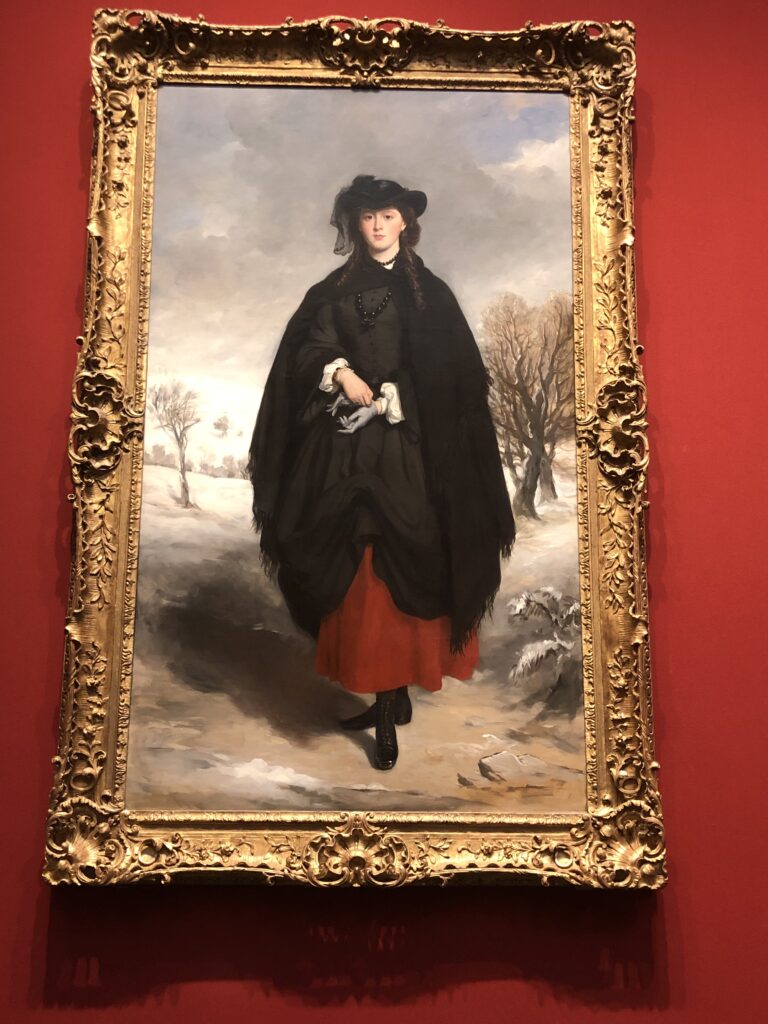
But, of course, the book is of most interest to Catholics, particularly Catholics who want to bring back truth, goodness, and beauty to the world around us, and most particularly Catholics who love the Traditional Latin Mass. Encountering the TLM led the authoress to realise that, just as there had been a rupture in the slow liturgical development of the Roman Rite, so had there been a rupture in Western aesthetics, including the aesthetics of dress.
In appreciating cultural artefacts of the world today, Miss Kalinowska writes about “despoiling the Egyptians”—as long as “the Egyptians possess something worth despoiling”— a reference to the Israelites fleeing captivity in Egypt with Pharoah’s gold. This reminds me of the 13th controversy over Aristotle and how Saint Thomas Aquinas nevertheless used his work to create the Summa Theologiae. However controversial it was at the time, Christians of the Middle Ages most definitely found both the Islamic and the Classical worlds worth despoiling. In fact their descendants did, too, as the beautiful Turkish carpets and Neo-classical buildings of Edinburgh attest.
The important word there is “beautiful.” Miss Kalinowska argues that almost all contemporary modes are not beautiful, and we can’t wear the objectively beautiful fashions of the past (the obvious solution) without making guys of ourselves. (My word, not hers.) The best we can do is elegance and hoping, praying, and working for the restoration of beauty to all the arts.
I am enthusiastic about this because I don’t think it is enough just to fight for the firm restoration of the TLM, a process ruptured by the aging ’68ers in the late Pope Francis’ court (including, sadly, PF himself). We don’t live at church; most laypeople are in one for an hour a day max, maybe up to two hours on a Sunday. Thus we must fight also for the restoration of the places in which we live: the natural environment, the architecture, the arts, crafts, trades, and businesses, the sounds (a very important example: children playing happily outdoors), the communal past times (like dancing), and the merry dance of courtship among men and women. They are all aspects of life that give a community its essence, and stop the hideous sameness that is creeping like mould all over the world. (What a joy, for example, that the Poles, most unlike anyone else, dance elaborate Polonaises shortly before graduating from secondary school, and how wonderful that the Viennese have a “waltzing season” from November 11 until Lent.)
This is not to romanticise the past. My people left Edinburgh for Canada for good reasons, reasons that happily no longer exist. Most Scots were (but 21% still are) very poor. Like everywhere else before 1950, babies and children died at a rate that shocks us today. Poverty drove frustration, drunkenness, resentment, and abuse. Thank God for the improvements of the second half of the 20th century. However, there grew up among these advances a lot of noxious weeds, including Brutalism (or what perhaps should be called Brutishism) in everything, including dress and manners.
Speaking of manners, last night Mr McLean and I watched Louis Theroux’s Netflix documentary “Inside the Manosphere,” and I found it deeply sad. The young men–mixed race, black, white, Filipino–who make millions from entertaining younger men with their antics live in such an ugly way. Their homes–a boring new build in Spain, a high-rise in Miami–are ugly. Their language is ugly. The way they treat female “guests” on their shows or on the streets is ugly.
The mixed-race British guy in Spain doesn’t really talk to girls (he ‘drops game’, which apparently means he confronts women on the street in a cheeky way) and as a voluptuary, he’s pathetic. Whereas his 1904 counterpart would have set up a luscious courtesan in a luxurious, perfumed and objectively beautiful flat (with maid), this chap accepted “sexual favours” (euphemism) from a random woman in the men’s toilets of a night club. (If women’s loos in the dance clubs I’ve frequented are anything to go by, a more disgusting place can scarcely be imagined.) And, meanwhile, the only woman with whom he has anything like a normal, let alone affectionate, relationship, is his mother.
If contemporary young men think this is at all a great way to be, then I despair for the future of Britain. And it makes me think I should revive “Seraphic Singles” so that once again I can add my voice to those telling Generation Z that they have better choices than crass animality or arranged marriages. Instead of behaving like lunatics (or dressing like strippers) on the streets, they can find (and adapt themselves for) the traditional places young men and women have always met each other: churches or church halls, village dances, multi-generational private parties, and, more recently, sodalities and lectures.
The top image by the way, is a screenshot of a National Scottish Galleries’ photo of “An Edinburgh ‘Fish Wife’” by David Allan. It is from the 1780s and a fair representation of what Edinburgh women of the working classes wore at the time. I have seen similar striped skirts in other Scottish paintings and photographs, and the local ‘fish wife’ dress persisted into the mid-20th century. We Lowlanders did not wear tartan until Highland gear was brought into fashion by Sir Walter Scott. By the way, in my neighbourhood–far from Billingsgate–being a fish wife was always considered a noble, almost a mystic, profession. Incidentally, the blue and red stripes above suggest that this is a Musselburgh fish wife; Edinburgh fish wives wives’ skirts featured yellow stripes.